GOVERNMENT JOBS
ARTICLE • 7 MIN READ
How to Get a State Government Job: A Guide
Explore how to get a state government job, from searching for vacancies and submitting applications to passing exams, interviews, and background checks.
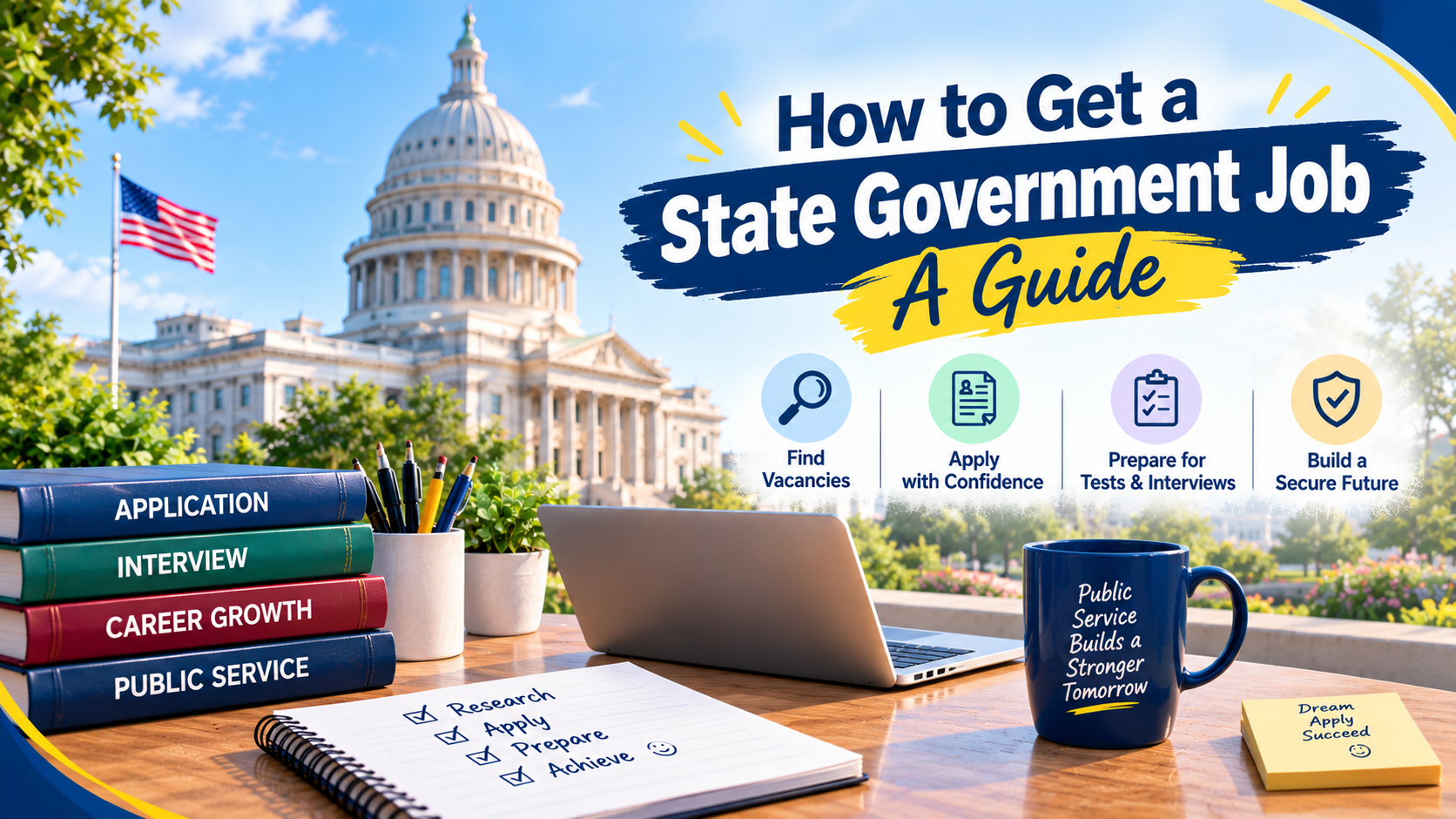
How to Get a State Government Job: A Guide
A career working for a state government can be rewarding. State agencies employ individuals in administrative, medical, and educational specialist posts. State positions also provide retirement plans and pension schemes.
The process can be intimidating, but knowing the essential steps makes it easier. The guide elaborates on how to search, apply, and practice for interviews. The CareerOneStop portal, sponsored by the U.S. Department of Labor, provides information on careers and how to prepare for interviews.
What Is a State Government Job?
A state government job is a position in a state agency that provides public services and facilitates programs. Agencies employ administrative officers, health and social service professionals, transport and engineering experts, and IT specialists.
Unlike federal jobs, state positions are managed by state governments. Federal jobs are posted on USAJOBS portal, whereas the state jobs are listed on their employment website. Every state has instructions, and it is essential to read through the advertisement instructions before applying.
Why Apply for a State Government Job?
State government jobs attract many applicants due to the benefits that come with it. Some positions offer life insurance, sick leave, and retirement plans. Furthermore, many state jobs have great opportunities for career advancement. The Bureau of Labor Statistics is an excellent source for researching careers. Compare the salary, benefits, responsibilities, and qualifications of the state government job you are considering with your needs.
Step 1: Choose a Career in Which You Are Qualified
Identify your interests and expertise, and go for a career that suits your qualifications. This way, you can cherry-pick the most suitable vacancy instead of applying to every post available. The My Next Move portal is a fantastic resource to identify occupations based on your interests. CareerOneStop portal also helps you research state-based careers.
Common state careers include administration, health and social services, engineering and IT, law enforcement, and education.
Step 2: Determine the Requirements
Every job advertisement specifies the qualifications and requirements. Go through this section and ensure that you meet the expectations. Ensure that you also fulfill preferred qualifications, skills, and technical proficiencies. Furthermore, ensure that you are a citizen of the state and submit all documents by the deadline.
Most vacancies require some level of formal education and relevant work experience, but others are entry-level and only require a high school graduation certificate. The CareerOneStop License Finder can help you identify the licensing requirements. If you do not meet the mandatory requirements, the application will be rejected. If you do not fully comprehend a requirement, contact the agency using the provided information.
Step 3: Search for Vacancies
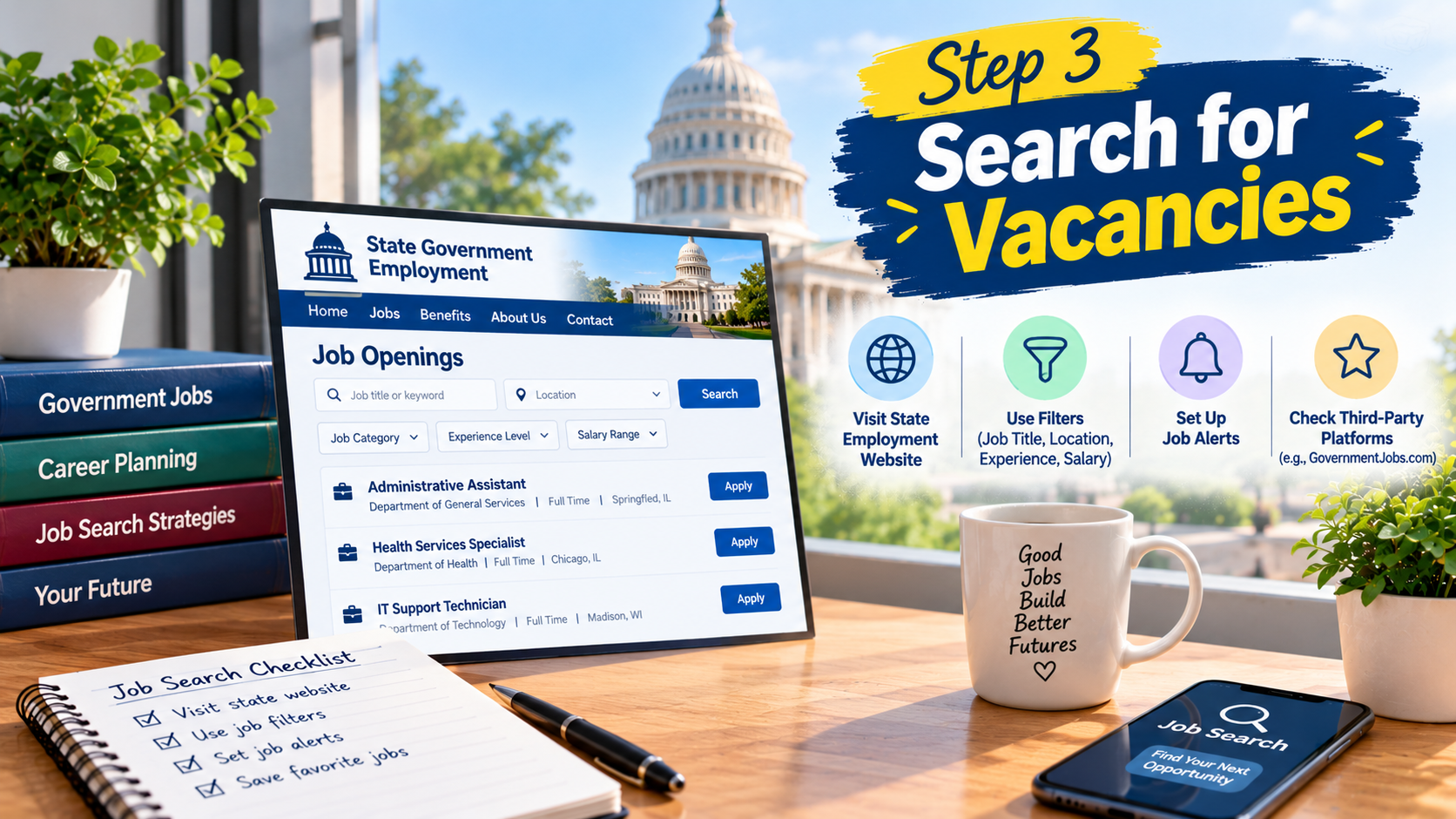
Go through the vacancies section on the state government employment website and explore the available positions. The USA.gov – State Governments portal can help you locate each state’s website. Search using the job title or location filter. Furthermore, you can sort the search results according to the experience level and salary ranges. Set up job alerts so that you are notified of new vacancies.
Some states use third-party platforms such as GovernmentJobs.com to post available positions. Every state has its own guidelines, so ensure that you follow the instructions when applying.
Step 4: Set Up a Profile
Most agencies require a web profile which provides vital information. Be precise when providing the details since the shortlisting panel uses the information to identify suitable candidates. Provide a valid email address so that you can receive application confirmation. Update the profile as necessary throughout the application process.
Step 5: Prepare a Resume
A resume is a summary of your qualifications, experience, skills, and other attributes. It enables the employer to determine whether to shortlist you for an interview. Use the following pointers while preparing a resume.
Review the advertisement and CareerOneStop portal for pointers.
Highlight relevant qualifications and areas of specialization.
Use keywords found in the advertisement.
Emphasize duties and accomplishments at every job, using statistics where possible.
Add the start and end dates of every position held, and the relevant certifications.
Avoid errors and use straightforward language.
Be precise when identifying attributes and skills. Instead of stating “Helped in the office,” provide concrete duties performed such as, filing, organizing, and record-keeping. Furthermore, highlight internships and volunteerism and avoid forging information.
Step 6: Fill Out the Application Form
Fill out the application form before the submission deadline. The form requires biographical, academic, and work-related information. Use the information provided in the resume and supporting documents. You may be required to provide additional documents, such as a recommendation letter or test results. Save a copy of the application form for future reference.
Step 7: Take Ability, Proficiency, and Other Tests
Since the selection process is highly competitive, most organizations adopt standardized tests to shortlist candidates. The tests can be written, oral, or physical, and some agencies adopt a combination of the three. Furthermore, employers may also conduct interviews, proficiency tests, and test the applicants’ knowledge of the industry. The ability tests vary depending on the nature of the vacancy. Request sample exams to identify the format of tests used.
Civil service jobs often require aspirants to pass a written examination. Review the skills section in the advertisement and prepare by practicing past papers. Some agencies publish a register of eligible candidates and their scores. However, passing the exams does not guarantee a job offer.
Step 8: Prepare for an Interview
Conduct research on the organization and review the interview materials found on the CareerOneStop portal. Some agencies utilize a scoring system, so identify the best way to respond to questions. Review the responsibilities of the post and ensure that you can describe them in detail. Use the STAR (Situation, Task, Action, Result) approach while responding to behavioral questions. Furthermore, arrive early, dress appropriately, and ask clarifying questions. Send a thank you note to the interview panel to highlight your interest in the position.
Step 9: Pass a Background Investigation
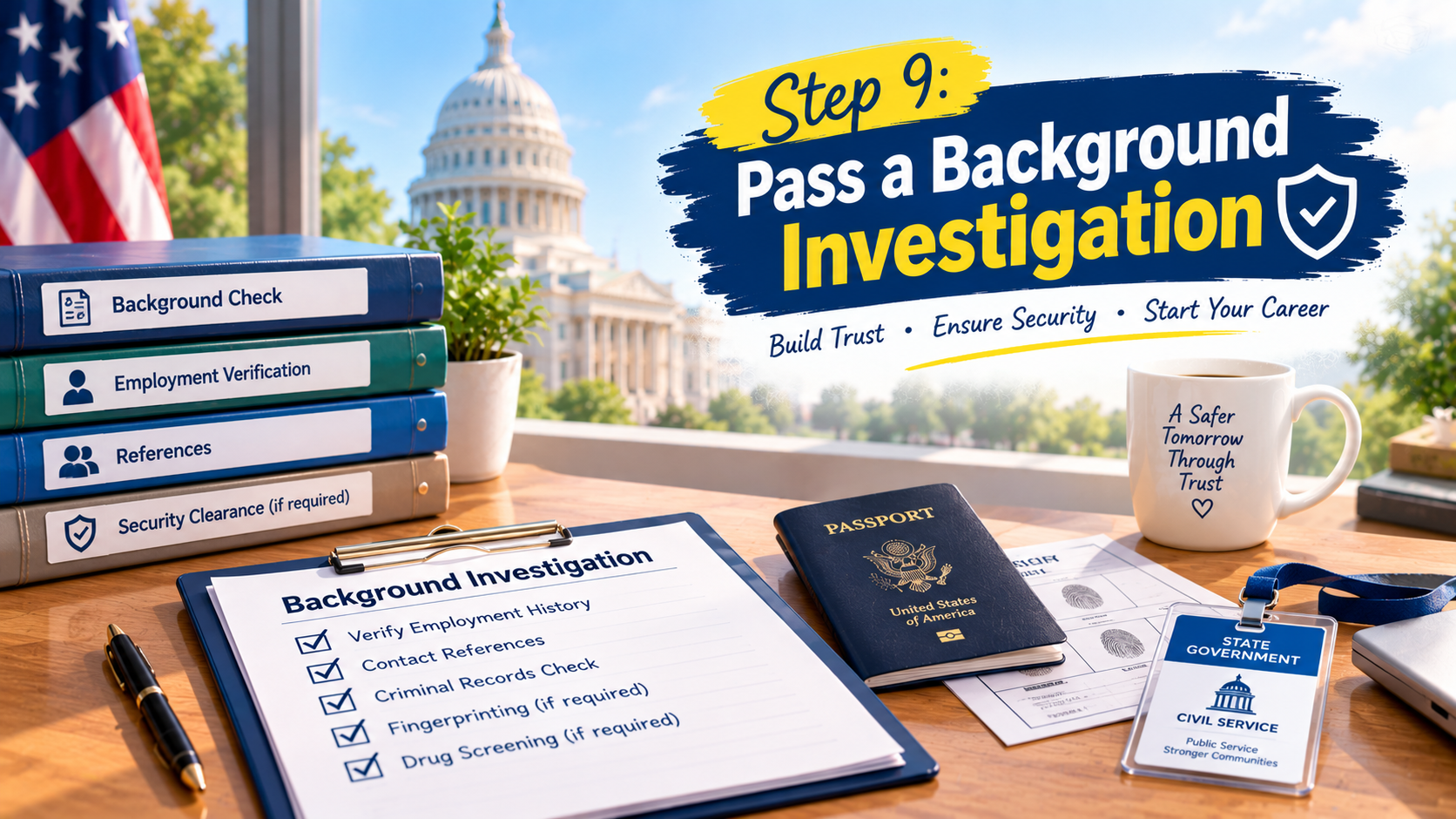
A background investigation is a routine procedure that employers use to verify the information provided by the applicant. Some employers reach out to previous employers, so it is essential to be truthful. You may also be asked to provide fingerprints, references, and undergo drug tests if the position permits. Avoid lying to prevent being denied employment. The FTC’s Employer Background Checks article provides more information.
Extra Tips
Apply for at least five suitable vacancies because the process can be lengthy.
Pursue internships, traineeships, and entry-level positions. They often lead to permanent employment.
Develop the skills required in your preferred career and network with industry experts.
Continuously visit employment websites.
Veterans should apply for vacancies that offer veteran preference and special benefits.
Customize the resume for every vacancy.
Common Mistakes
Sending an incomplete application form
Using the same resume for different vacancies
Missing the application deadline
Providing false information
Failing to submit required documents
Getting discouraged after rejection.
Final Thoughts
Getting a government job is a great opportunity, and the guide highlights the essential steps to secure it. Choose a career that suits your qualifications, go through your state’s employment website, and analyze requirements before submitting an application. Furthermore, tailor-make a resume, practice for ability tests, and prepare for interviews. Furthermore, it may take a while to hear back after an interview, so do not get discouraged if there is a rejection. Visit your state’s employment website and start pursuing a career in government today.
Was this career guide helpful?
Your feedback helps our editorial desk improve future publications.
Editorial Transparency & Policy Note: At CareerNexaa, our mission is to deliver truthful, carefully vetted career insights. All job postings and guides are verified against official company releases. For additional questions or to report out-of-date information, please visit our Contact Page.
Discussion & Reader Comments 0
Leave a Comment or Question
Share your perspective, ask for advice, or contribute to this career guide. (Your email will remain private).
No comments yet
Be the first reader to share your feedback or ask a question!