RESUME & INTERVIEW PREP
ARTICLE • 8 MIN READ
Federal Resume and Job Search Guide for Beginners
Learn how to write a federal resume, apply with no experience, and understand GS-5 and GS-7 jobs. A step-by-step USAJOBS guide for first-time applicants.

Federal Resume and Job Search Guide for Beginners
Starting a career with the U.S. federal government can feel challenging, especially when you have little or no professional experience. However, understanding federal resume requirements, researching job announcements, and preparing the right documents can make the process easier.
This Federal Resume and Job Search Guide for Beginners explains how to prepare a federal resume, understand GS-5 and GS-7 positions, highlight your skills, explore opportunities without professional experience, and avoid common application mistakes.
Federal hiring requirements vary by position and agency. Always read the official vacancy announcement carefully and follow the instructions provided by the hiring agency.
What Should a Federal Resume Include?
A well-organized federal resume generally contains the following information, depending on the position:
Contact information: Include your full name, phone number, and a professional email address.
Professional summary: Write a short introduction highlighting your relevant abilities, interests, and qualifications.
Education: List your school or institution, degree or qualification, and completion date. Include your GPA when requested or relevant to the announcement.
Work experience: Provide your job title, employer, employment dates, hours worked per week, and relevant responsibilities.
Projects and volunteer work: Describe activities that demonstrate skills related to the position, even if they were unpaid.
Technical skills: Mention relevant software, computer applications, research methods, and other practical abilities.
Training and certifications: Include relevant courses, licenses, and certificates when applicable.
Some announcements may request additional details or supporting documents. Include them when required, and never exaggerate your education, experience, or abilities.
You can create a resume using the USAJOBS Resume Builder, which helps you organize your information and tailor your resume to different vacancies.
1. Federal Resume Competencies: Understanding KSAs
KSAs stands for Knowledge, Skills, and Abilities. These terms describe the qualities applicants need to perform the duties of a particular position. They are also commonly discussed under the broader term competencies.
Employers may assess these qualities through resumes, application questionnaires, interviews, tests, or other evaluation methods.
Common competencies include:
Written and verbal communication
Customer service
Data entry and information management
Recordkeeping and organization
Problem-solving
Computer proficiency
Research and teamwork
How to Demonstrate Your Skills
Instead of simply listing a skill, explain how you used it. Include specific details or measurable results whenever possible.
Here are some examples you can adapt to your actual experience:
Data handling: Entered project information into a spreadsheet and reviewed records for accuracy during a class assignment.
Communication: Prepared and delivered a research presentation, explaining key findings and answering questions.
Teamwork: Collaborated with classmates on a group project, coordinated research tasks, and helped prepare the final presentation.
Recordkeeping: Maintained an organized activity log and updated records regularly during a volunteer assignment.
Use these examples as writing models, not as claims to copy if you did not perform the activities.
For more information, read the USAJOBS guide to KSAs.
2. How to Tailor Your Resume to a Federal Job Vacancy
Sending the same resume to every employer can make it harder to demonstrate your suitability for different positions. A targeted resume focuses on the qualifications and responsibilities that matter most for a specific vacancy.
Follow these steps before submitting an application:
Read the job announcement: Review the duties, qualifications, education requirements, and application instructions.
Identify important competencies: Make a list of the skills and experience mentioned in the announcement.
Match your qualifications: Connect relevant education, training, projects, volunteer activities, and employment history to the listed requirements.
Use relevant keywords: Include terminology from the announcement when it accurately describes your background.
Show results: Explain what you accomplished and include numbers or outcomes when you can support them.
Proofread your resume: Check spelling, dates, contact details, and required information before submitting it.
A targeted resume helps reviewers understand how your background relates to the position without having to guess what your skills mean.

Not having a paid job does not mean you have no relevant experience. Depending on the vacancy, education, coursework, training, volunteering, and personal projects may help demonstrate your abilities.
However, these activities do not automatically replace specialized experience when a position specifically requires it.
Build Relevant Skills
Start by identifying the skills needed for the types of jobs you want to pursue. Then look for practical ways to develop them.
Consider these options:
Take relevant courses: Learn office software, writing, data entry, research, or another skill related to your chosen field.
Complete personal projects: Create examples of your work and document the tools, methods, and results.
Explore volunteering: Community organizations, schools, and clubs may offer opportunities to practice communication and organizational skills.
Develop computer skills: Practice using tools such as Microsoft Word, Excel, and Google Workspace when relevant to the position.
Keep training records: Save certificates and note the dates and skills covered by each course.
Describe every activity accurately. For example, a personal research project can demonstrate research skills, but it should not be presented as paid employment.
Explore Federal Student and Graduate Programs
Some federal agencies offer structured opportunities for students and recent graduates through the Pathways Programs.
The Internship Program can provide qualifying high school, undergraduate, and graduate students with opportunities to explore federal careers. Eligibility conditions apply, and individual announcements explain who may apply.
Learn more through the official OPM Pathways Program information and search for opportunities on USAJOBS.
Remember that eligibility depends on the program, educational status, and specific vacancy requirements.
3. Public Trust and Federal Background Checks
Some federal positions require a background investigation before an applicant can begin work. The type and scope of the investigation depend on the responsibilities and requirements of the position.
A Public Trust designation is not the same as a national security clearance. Public Trust positions involve suitability or fitness assessments appropriate to the role, while national security positions follow separate clearance requirements.
The vacancy announcement explains the applicable requirements when they are relevant.
How to Prepare for the Process
You can prepare by following a few practical steps:
Provide accurate information: Answer all application and investigation questions honestly.
Organize your records: Keep relevant information about previous addresses, education, employment, and references available when requested.
Respond promptly: Follow instructions and respond to requests from the hiring agency or authorized investigator.
Protect personal information: Share sensitive details only through the appropriate official process.
Follow agency instructions: Procedures may differ depending on the position and investigation.
No preparation method can guarantee approval. Decisions depend on the applicable requirements and the results of the relevant process.
For official guidance, visit the OPM Personnel Vetting resources.
4. Finding Department of Defense Civilian Jobs With No Experience
The U.S. Department of Defense (DoD) employs civilians in a wide range of administrative, technical, professional, and support roles. Some vacancies may suit early-career applicants, while others require specialized education or previous experience.
The key is to evaluate each announcement individually rather than assuming every position is open to beginners.
What to Check in a Job Announcement
| Job announcement detail | Why it matters |
|---|---|
| Series and grade | Identifies the occupational field and grade of the position. |
| Education and experience | Explains the qualifications applicants must meet. |
| Who may apply | Identifies the groups eligible to submit applications. |
| Citizenship and eligibility | Clarifies citizenship or other appointment requirements. |
| Background or clearance requirements | Explains any required investigation or clearance. |
| Appointment type | Identifies whether the role is permanent, temporary, or an internship. |
| Required documents | Lists transcripts, certifications, or other supporting materials. |
Most federal positions require U.S. citizenship, although exceptions can exist under specific rules. Applicants should verify eligibility rather than assume they can apply.
Start your search on USAJOBS and review the official U.S. Department of Defense website for information about the department.
5. Common Federal Job Mistakes
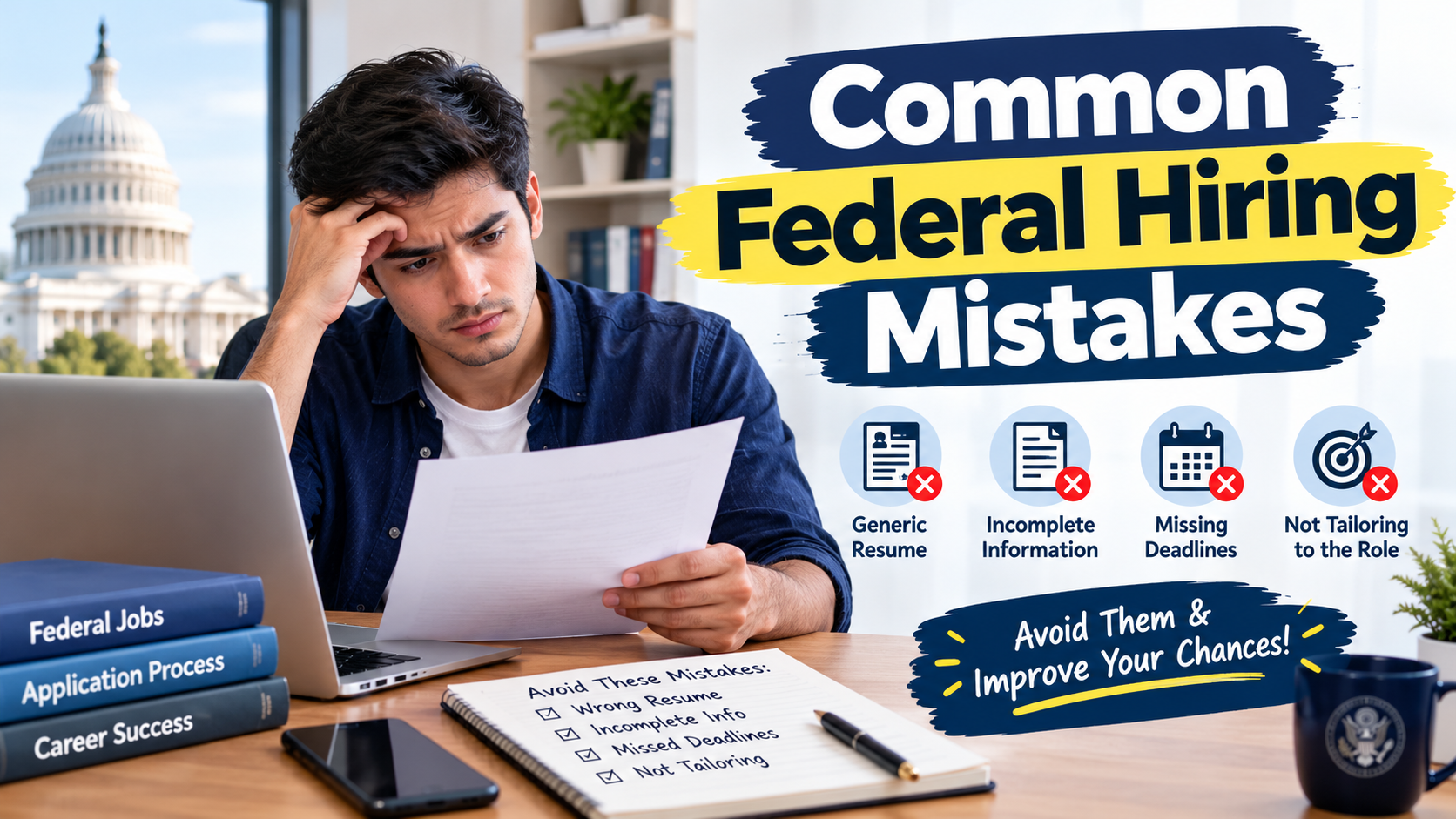
Even qualified applicants can weaken their applications by overlooking basic instructions. The following table highlights common mistakes and how to prevent them.
| Common mistake | How to avoid it |
|---|---|
| Ignoring eligibility rules | Read the “Who may apply” and qualifications sections carefully. |
| Using a generic resume | Customize relevant information for each vacancy. |
| Missing documents | Check the required documents list before submitting. |
| Applying at the last minute | Prepare early and submit before the closing deadline. |
| Exaggerating qualifications | Describe your experience and skills honestly. |
| Missing notifications | Check your email, spam folder, and USAJOBS account regularly. |
| Expecting an immediate response | Allow time for the agency's hiring process and continue developing your skills. |
You can find additional application guidance in the USAJOBS Help Center.
6. Federal Job Search Action Plan for Beginners
A simple plan can help you organize your search and track your progress.
Use the following checklist as you prepare:
Create a profile on USAJOBS and complete the relevant sections.
Identify three occupational fields or series that match your interests and qualifications.
Review qualification standards and eligibility rules for those fields.
Prepare a resume that highlights relevant education, experience, skills, and projects.
Gather transcripts, certificates, and other documents required by each vacancy.
Save relevant job searches and set up notifications when available.
Review each announcement before applying.
Submit applications before the stated deadlines.
Keep track of submitted applications and their status.
Continue learning and improving relevant skills while you search.
If you need help with your account, resume, or application, consult the official USAJOBS Help Center.
Conclusion
Finding a federal job requires preparation, careful research, and an understanding of the government's hiring requirements. Although some opportunities are suitable for early-career applicants, each position has its own eligibility criteria, qualifications, and application instructions.
Start by learning how to write a targeted federal resume, identifying relevant occupational fields, and checking whether your education or experience meets the requirements. If you have no professional experience, consider developing your skills through coursework, projects, volunteering, and eligible student programs.
Use official resources such as USAJOBS and the Office of Personnel Management to verify current requirements. Treat every application as an opportunity to improve your approach, strengthen your qualifications, and make more informed career decisions.
Was this career guide helpful?
Your feedback helps our editorial desk improve future publications.
Editorial Transparency & Policy Note: At CareerNexaa, our mission is to deliver truthful, carefully vetted career insights. All job postings and guides are verified against official company releases. For additional questions or to report out-of-date information, please visit our Contact Page.
Discussion & Reader Comments 0
Leave a Comment or Question
Share your perspective, ask for advice, or contribute to this career guide. (Your email will remain private).
No comments yet
Be the first reader to share your feedback or ask a question!